137 views
For years, silence became part of my routine.
Not peace. Not acceptance. Just silence.
I measured it the way other people measured healing—one day at a time, one square at a time, crossed off on the crooked calendar hanging beside the refrigerator. Five years, three months, and twelve days since Grace walked out of my life.
I knew the number because I made sure I knew it.
Every morning, I stood in the same kitchen where everything had fallen apart and marked another day survived without her.
The calendar still leaned slightly to one side, crooked from the force of the door slam that had shaken the magnets loose the day she left. I never fixed it. I told myself it was laziness, but that wasn’t the truth. The truth was that straightening it felt too much like admitting something permanent had happened.
That kitchen used to be the heart of our family.
Jean would hum while she cooked—always off-key, always with complete confidence—and Grace, as a little girl, would sneak strips of bacon from the pan and grin when she thought no one noticed. I’d pretend not to see it until Jean laughed and said, “Vincent, if you keep letting her get away with that, she’s going to think rules don’t apply to her.”
And I’d shrug and say, “They don’t. She’s four.”
That was how old Grace was when I met her.
She had missing front teeth, a fierce little attitude, and absolutely no intention of letting me become important. Jean warned me early. On our third date, sitting in a diner booth with bad coffee and sticky syrup on the table, she leaned in and said, “Grace has never had a father. If you aren’t serious, walk away now.”
I remember answering without hesitation.
“I’m not going anywhere.”
Grace tested that promise every chance she got. She called me her mom’s friend. Refused my help. Looked at me like I was temporary.
But I stayed.
I learned how to braid patience into everyday life. I taught her to tie her shoes. Held her hair back when she was sick. Glared at prom dates from the front porch like it was a sacred duty. And somewhere between skinned knees, school plays, late-night fevers, and grease-stained weekends in the garage, she became my daughter in every way that mattered.
Not on paper.
We had talked once about making it official, about adoption. But Jean had smiled and said, “When life settles down.”
Life never did.
Jean died suddenly. An aneurysm. No warning, no time to prepare, no chance to say goodbye.
Grace was eighteen. I was barely functioning. The house filled with casseroles, sympathy, and useless phrases about staying strong. Grace hardly spoke. When she did, her words came sharp, brittle, and aimed at whatever might break.
I made the mistake of trying to keep everything normal.
I kept making dinner. Kept asking about school. Kept saying “we” as though the future still belonged to us both in the same way.
What I didn’t understand then was that grief sometimes needs somewhere to land.
And Grace let it land on me.
A few years later, I opened Jean’s closet.
Her clothes had been hanging there untouched since the funeral. Faint traces of perfume still clung to the fabric. I stood there for a long time before I touched anything, telling myself Jean would have wanted those clothes to matter to someone instead of collecting dust.
A family at church had just lost everything in a fire, so I packed the clothes and gave them away.
It felt compassionate.
It felt right.
Until Grace came home, saw the empty closet, and went still in that terrifying, quiet way some people do before they explode.
“You gave them away.”
“I donated them,” I said carefully. “Someone needed them.”
Her jaw tightened. “You had no right.”
“Grace, please. Your mom would have wanted—”
“We?” she cut in, laughing without humor. “There is no ‘we,’ Vincent. You are not my father. You were just her husband. Just some man who lived in our house.”
The words hit harder than I let her see.
“I raised you,” I said, stunned.
“Well, she’s gone,” she snapped, grabbing her bag and shoving clothes into it with frantic hands. “So you don’t matter anymore.”
Then the door slammed.
And that sound lived in my head for years.
I tried everything after that. Calls. Emails. Letters. Old addresses. Dead ends. Silence.
Silence became the only answer I got.
Until last week.
That morning started like every other. I crossed off another square on the calendar and made coffee. Then I heard a truck outside.
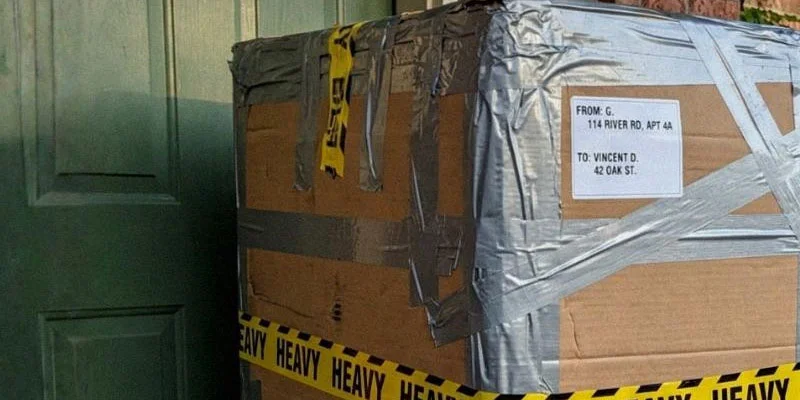
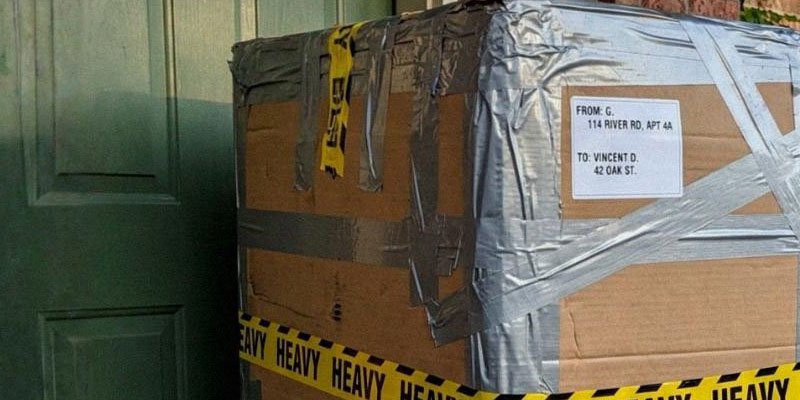
I looked through the window and saw a delivery driver wrestling a massive box onto my porch.
“I didn’t order anything,” I said aloud, stepping outside.
The driver grunted as he dropped it down. “Well, somebody ordered something. This thing weighs like a small car.”
I signed for it, confused, then looked at the label.
No company name. A return address from three states away.
And one letter.
G.
My heart started pounding so hard it hurt.
I knew that handwriting.
I dragged the box inside, my back protesting the whole way, then stood over it for what felt like forever, afraid of what it might contain. An ending? A rejection? A final act of anger boxed up and shipped to my doorstep?
Finally, I cut through the tape.
There was no padding, no careful wrapping. Just a thick moving blanket around something large and uneven.
The second I peeled it back, the smell hit me.
Oil. Metal polish. Degreaser.
My knees nearly gave out before my mind even caught up.
I knew that smell.
It carried me backward instantly—Saturday mornings in the garage, Grace wiping grease across her cheek, grinning and saying, “You missed a spot, Vincent,” like she was the expert and I was lucky she let me help.
My hands started moving faster. I yanked away the blanket, and sunlight from the living room window flashed across polished metal.
I froze.
It was an engine block.
Not just any engine block.
The engine block from the 1967 Mustang Grace and I had dragged home from the scrapyard when she was fourteen.
I recognized the casting number. The small weld mark where I’d messed up years ago. The shape of something we had once dreamed of rebuilding together.
Only this one wasn’t rusted and half-dead like the one we left behind.
This one was beautiful.
The cylinders were honed smooth. The exterior had been painted. Chrome valve covers gleamed beside it like mirrors. I stared at the color and felt my throat tighten.
Blue.
My color.
Grace had wanted red. We argued about it for weeks back then.
And she painted it blue.
I sank to the floor.
I touched the metal with shaking fingers, almost expecting it to vanish. It didn’t.
And then it hit me—she had not spent five years forgetting me.
She had spent five years finishing what we started.
A sound broke out of me then, raw and humiliating and completely out of my control. I leaned forward, pressed my forehead against that engine block, and wrapped my arms around it like it was a living thing.
I cried for Jean.
For Grace.
For every year I thought was gone for good.
Tucked inside one of the cylinder bores was a white envelope, edges smudged with grease. My name was written across the front.
I opened it with trembling hands.
“Dear Dad,
I know I’m five years late. I know I said things I can never take back. When Mom died, I felt like if I let you be my father, then I was admitting she was really gone. I was angry, and I wanted to hurt you because I was hurting. I am so sorry.
I took the block when I left. I dragged it through three apartments. I didn’t know how to fix it, so I took classes. I learned how to machine and polish and rebuild. Every time I worked on it, it felt like talking to you. It took me five years to get good enough to finish it the way you taught me. I needed to grow up before I knew how to repair us.
I saw the house listing online. Please don’t sell the garage tools yet. We still have an engine to install.
Also, check the bottom of the box.
Love, Grace.”
Dad.
She called me Dad.
I laughed and cried at the same time, pressing the letter to my chest like it might disappear if I loosened my grip.
Then I reached into the bottom of the box.
There was a framed photograph.
Grace looked older, leaner, more tired around the eyes—but alive, real, and unmistakably herself. In her arms was a newborn baby boy wrapped in a blanket covered in tiny cars. His little fist was curled against her chest.
Clipped to the frame was a plane ticket for the next day.
On the back of the photo, in her handwriting, were the words:
“Come meet your grandson, Vincent Junior. He needs his Grandpa to teach him how to use a wrench.”
I sat there on the hallway floor with the photo in one hand and her letter in the other, completely undone.
Through the window, I could see the For Sale sign in the yard.
After enough years alone, I had convinced myself the house was too big, too empty, too full of ghosts. Denise, the realtor, had called it a home with good bones.
But sitting there with that photograph in my lap, I realized the house didn’t feel empty anymore.
It felt like it was waiting.
I pulled out my phone and called Denise.
“We’ve already had interest,” she said brightly.
“Take the sign down,” I told her.
There was a pause. “I’m sorry?”
“I’m keeping the house,” I said. “I’m going to need the garage.”
She laughed softly. “Well, that’s the easiest cancellation I’ll do this week.”
After I hung up, I looked around the kitchen, the hallway, the old walls that had held so much silence.
And for the first time in years, none of it felt final.
The engine block sat there gleaming in the light like proof that love had kept working even when I couldn’t see it.
I looked at it, then at the plane ticket, then at the photograph of my daughter holding my grandson.
“I’m coming, baby,” I whispered. “And I’m not going anywhere.”
For years, I thought silence was all she had left for me.
It turned out she had been building her way back the whole time.




Leave a Reply